
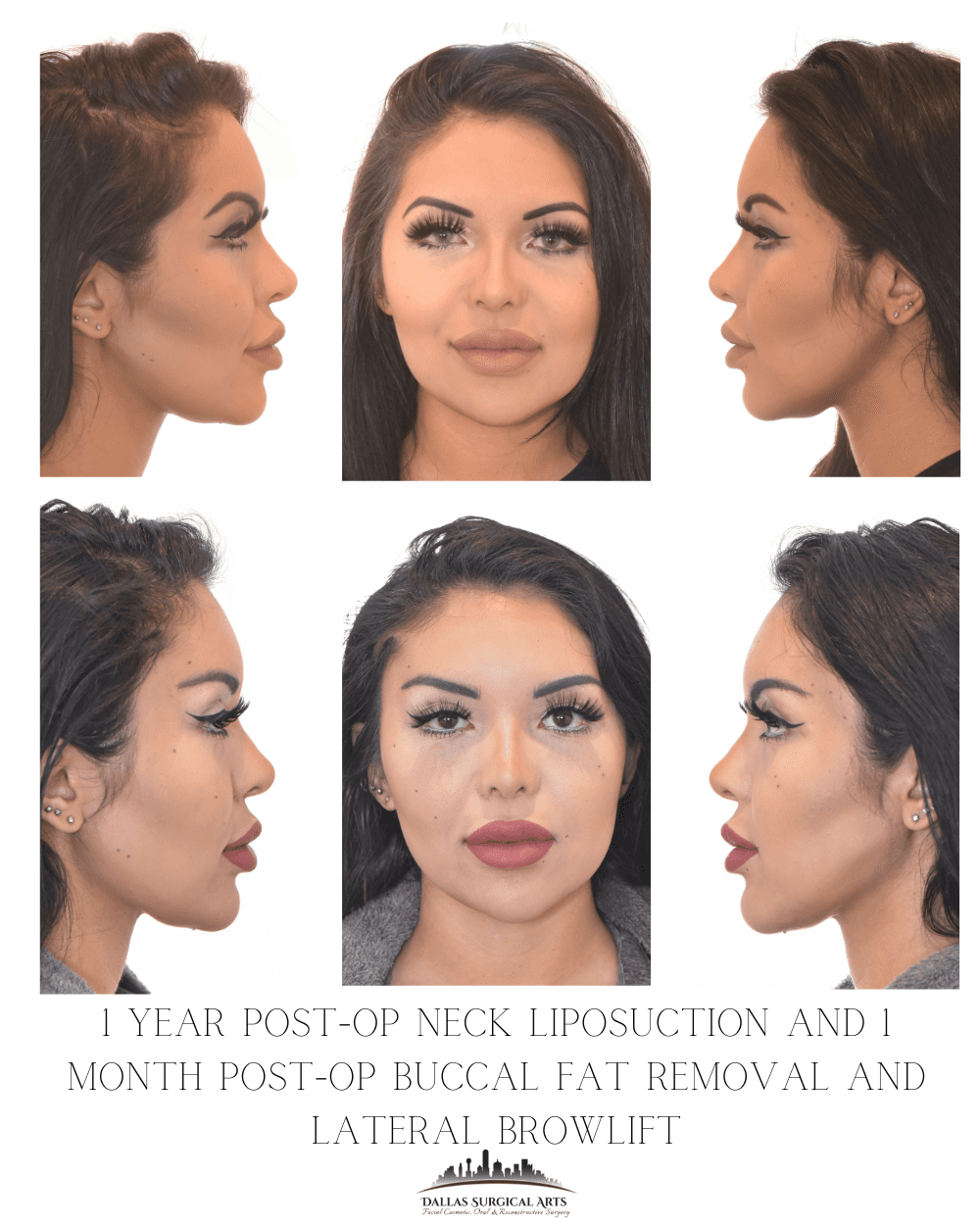
A fuller or rounder lower cheek appearance can sometimes persist even when you maintain a healthy lifestyle and stable weight. For people who want refined midface contours and to highlight their natural cheekbone structure, a surgeon may discuss buccal fat removal with them. Here is everything the procedure entails, how candidacy is evaluated, and what recovery typically involves.
What is buccal fat removal?
The buccal fat pad is a pocket of deep fat located in the lower cheek between the facial muscles. Everyone has buccal fat pads, their size varies naturally from person to person due to genetics and facial anatomy. When these pads are more prominent they can create a softer, rounder lower face. Unlike superficial fat beneath the skin, deep buccal fat does not always respond to diet or exercise.
During buccal fat removal (also called cheek reduction surgery) dual board-certified facial cosmetic surgeon and oral and maxillofacial surgeon Dr. Randy Sanovich reduces a portion of this deep fat pad to create a slimmer transition between the cheekbones and the jawline.
Reasons people consider an evaluation Individuals who explore buccal fat pad removal often want a more contoured facial profile or feel that fullness in their lower cheeks hides their natural bone structure. However, lower cheek roundness is not always caused by buccal fat alone. Overall weight distribution, jaw muscle thickness, bone structure, and skin elasticity all play a role in how the lower face looks.
Depending on a patient's anatomy and aesthetic goals, a surgeon may discuss buccal fat removal on its own or alongside other facial procedures, such as a facelift, brow lift, or jawline contouring.
How is candidacy determined?
A board-certified facial cosmetic surgeon like Dr. Randy Sanovich, will review your health history, examine your facial proportions and talk through your goals. Proper evaluation matters because facial fat naturally decreases as we age. Removing too much buccal fat in someone who already has a narrow or thin face can lead to an overly hollowed appearance later in life. A thorough consultation helps ensure the surgical plan supports balanced, natural-looking proportions over time.
Questions to Ask at Your Consultation
Is my lower cheek fullness caused primarily by buccal fat or by other factors?
How much fat removal is appropriate for my facial structure as I age?
Should this procedure be considered on its own or alongside another treatment?
What type of anesthesia will be used and how’s the best way to prepare?
What dietary and oral hygiene steps will I need to follow during the first two weeks?
Which warning signs mean I should call your office?
What happens during the procedure?
At Dallas Surgical Arts, buccal fat removal is performed on an outpatient basis by Dr. Randy Sanovich. A small incision is made inside of each cheek which avoids any visible external scars on the face. Through these intraoral incisions, the targeted amount of buccal fat is carefully accessed and removed based on your customized surgical plan.
The incisions are then closed with sutures, which typically remain in place for two to three weeks before any remaining stitches are removed at a follow-up visit.
What should I expect from recovery?
Recovery can look different from patient to patient and post-operative instructions are tailored to each individual. After surgery, it’s common to experience temporary swelling, bruising, soreness and tightness inside the cheeks. Facial swelling and bruising generally begin to ease after 10 to 14 days, while swelling inside the mouth can take up to four weeks to settle. Some patients also notice temporary numbness or mild changes in their smile while tissues heal, which typically resolves over three to six months.
The buccal fat removal post-operative instructions from Dallas Surgical Arts outline general recovery steps such as wearing a supportive head wrap for the first 24 hours, sleeping with your head elevated for 10 days, staying well hydrated, following a liquid and soft-food diet during the first week and using a prescribed antimicrobial mouth rinse. Patients are also advised to avoid strenuous activity for one week while still taking light walks around the house to support healthy circulation. Always follow the specific care plan provided by your surgical team, and contact the office if you have questions while healing.
Frequently Asked Questions
Will buccal fat removal leave visible scars?
No. Because the incisions are placed inside the mouth along the inner cheek, there are no external incisions or visible facial scars.
Are the results permanent?
Once buccal fat cells are removed, they do not grow back. However, normal aging, changes in skin elasticity, and significant weight gain or loss will still affect your overall facial appearance over time.
When will I see the final results?
Initial contour changes typically become noticeable around six weeks after surgery as early swelling fades. Because deep tissues continue to settle gradually, optimal results are usually seen at six months or more.
Schedule Your Consultation
Take the next step If you want to learn whether buccal fat removal fits your facial anatomy and goals, an in-person consultation can provide clear answers. Contact Dallas Surgical Arts to schedule an evaluation with Dr. Randy Sanovich.
This blog post is for informational purposes and is not a substitute for medical advice, diagnosis or treatment. Individual results and post-treatment recovery may vary.