
Undergoing rhinoplasty is a significant decision, and preparing for the recovery period is just as important as the surgery itself. Knowing what to expect step by step can make your healing process much smoother and far less stressful. Keep reading for tips and insights to give you confidence in your rhinoplasty procedure and the recovery process!
Preparing Before Surgery
Before your scheduled surgery date, we will have you come in for a pre-surgical appointment. Usually this is within a week or two of your procedure. This visit is crucial, as it allows us to go over all post-operative instructions thoroughly and provide you with a list of medications that will be called into your pharmacy. We strongly recommend that whoever is taking care of you after surgery is in attendance at this pre-surgical appointment so they can hear and understand the instructions firsthand as your caregiver. This will help ensure your post-op experience is smooth and successful.
To help prevent bruising, we provide a complimentary dose of arnica that you can start taking eight days prior to your procedure. If you would like to continue taking arnica after surgery, additional supplements can be purchased at our office or in common drugstores. We recommend gathering all your post-op supplies and necessary items before your surgery day so you can go home immediately after your procedure and rest comfortably.
What to Expect Right After Surgery
Facial swelling and bruising, especially around the eyes, are both completely normal symptoms to have after a rhinoplasty. These symptoms typically start to minimize within a week or so, but to help keep swelling under control, we recommend sleeping in a reclined position during the initial recovery.
You will be sent home with gauze taped underneath your nose to catch any post-op drainage. You may replace this as needed using the extra tape and gauze provided in your care package. You can remove this dressing once the drainage has stopped entirely, which is usually about 3 days post-op.
Wound Care and Daily Comfort
You should avoid trying to clean the sutured area directly. If you feel like cleaning is necessary, please be extremely gentle and use a cotton swab only on the outer part of the incision. Never touch the inside of your nose. Apply a small amount of Aquaphor over the visible sutured area to keep the incision moist, which promotes minimal scarring. You may use a saline nasal spray to keep the insides of your nostrils moist. If you use a nasal spray, avoid sniffling and allow the liquid to drain naturally from your nose over a sink. Placing a humidifier in your bedroom will also help with moisture control and ease the stuffiness you will experience.
Glasses cannot be worn for six weeks following surgery. We advise using contact lenses as a visual aid during this time, or you can suspend your glasses on your forehead using a piece of tape, and we can show you how to do this during an office visit.
Prescriptions and Medications
Your prescriptions will be tailored specifically to your health history:
Pain medication will be prescribed for the first three to five days after surgery.
A migraine medication may also be prescribed for pain management, which some patients prefer over standard pain medication.
An antibiotic will be prescribed for you to start taking the day after surgery.
A steroid will be prescribed to help actively reduce swelling.
Anti-nausea medication will help limit any nausea you might experience after waking up from anesthesia.
Managing Your Splint and Showering
You will have a hard nasal splint on the bridge of your nose that must remain in place for one week. Please keep this splint as dry as possible throughout the week. You may shower following surgery, but be mindful of the splint and avoid getting it wet or exposing it to excessive hot steam. Always keep a thin coat of Aquaphor on the incision site, applying it three to five times per day for the first week.
Follow-Up Visits and Long-Term Healing
You will have a follow-up appointment one week after the procedure to assess your incisions and overall healing progress. At this visit, we will remove both the splint and the sutures. Because this appointment can sometimes be uncomfortable, we recommend eating a light meal beforehand and having your caregiver drive you home.
Once the splint is removed, you may experience an acne outbreak from the tape applied underneath. We can provide targeted skincare recommendations or schedule you with one of our estheticians for a custom treatment plan. Additionally, our office features a Candela Vbeam Prima Perfecta Laser Machine, a pulsed-dye laser that can help reduce the appearance of redness or purple bruising more quickly. We also take post-op photos at each follow-up appointment to carefully monitor your healing progress. A second follow-up takes place two weeks post-surgery to assess remaining swelling and address any concerns.
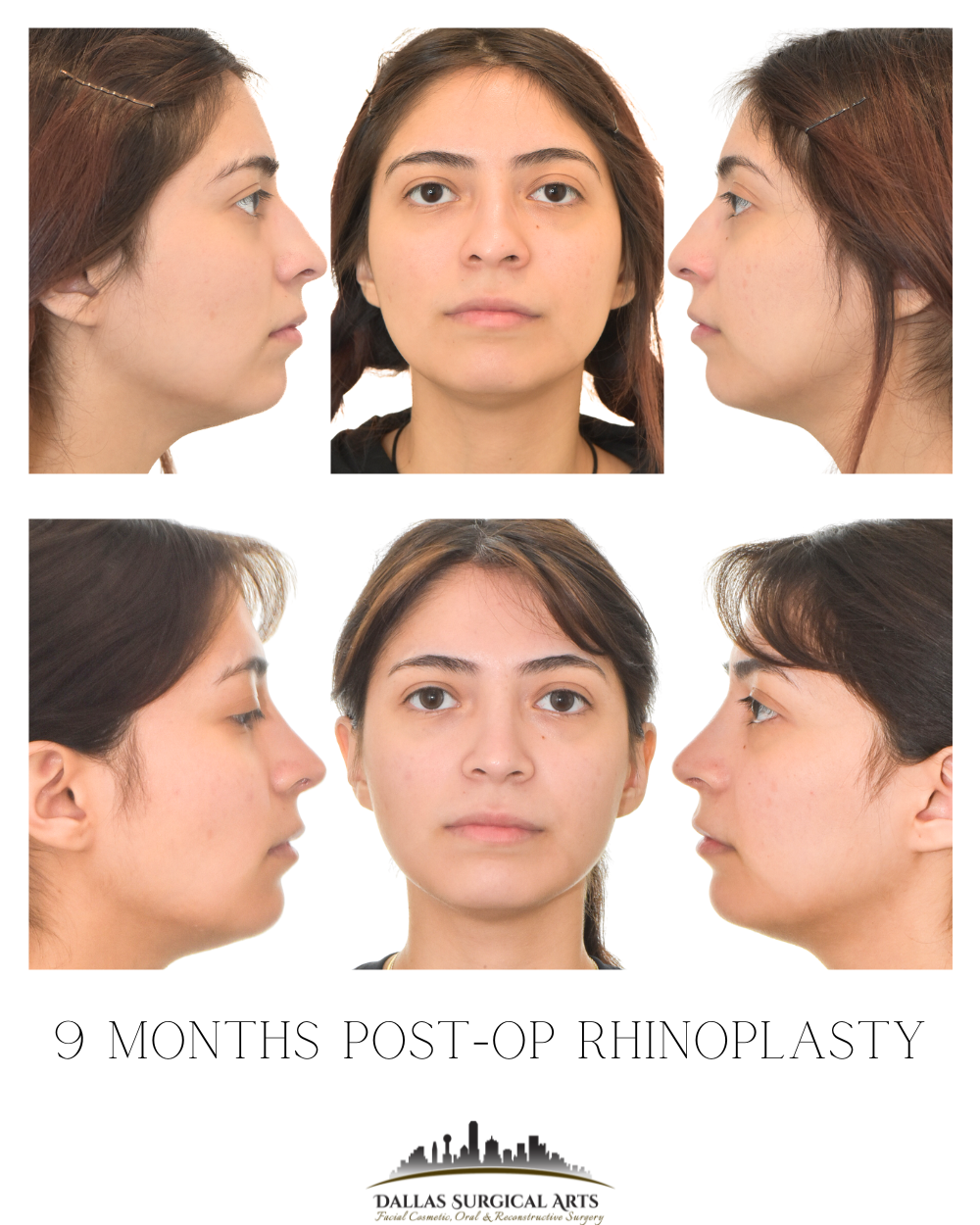
Keep in mind that swelling in the nose can take up to a full year to completely go away. Your nose will go through many changes in the first three to six months, so we encourage you to trust the healing process. We will have you tape your nose nightly to help with even swelling and shaping throughout your recovery. You are always welcome to call or email our office if you have questions between visits.
Activity Levels After Surgery
Avoid any strenuous physical activity for one to two weeks. Be very careful not to hit or bump your nose, especially around small children and pets, and never rub your nose with a tissue. You may return to school or light duty work within a week of surgery.
Although you are recovering, we recommend that you do not stay completely in bed while awake. Movement and blood flow make recovery easier, so try to transfer to a chair and walk around the house. Be as active as possible while strictly avoiding strenuous tasks.
When to Call Dallas Surgical Arts
Please call our office immediately if you experience any of the following:
Difficulty breathing
Difficulty closing your eyes after surgery
Inability to urinate
Severe pain that is not improved with medications
An oral temperature over 100.5 degrees
A rash, nausea, vomiting, severe headache, severe constipation, or other unexpected reactions
If you experience excessive bleeding, lie down with your head elevated about 30 degrees, apply two sprays of Afrin nasal spray into each nostril, and remain quiet and relaxed for 15 to 30 minutes. If this does not stop the bleeding, call our office right away.
Ready to schedule or want to learn more? Contact Dallas Surgical Arts today!